ARCHETYPE 10
元気Genki
Pure energy. The scene starts moving when they arrive.
bright energy + instant momentum
A signal, not the whole characterSeen in the wild
Characters with this energy
These examples show the pattern at work. No character fits inside a single word.
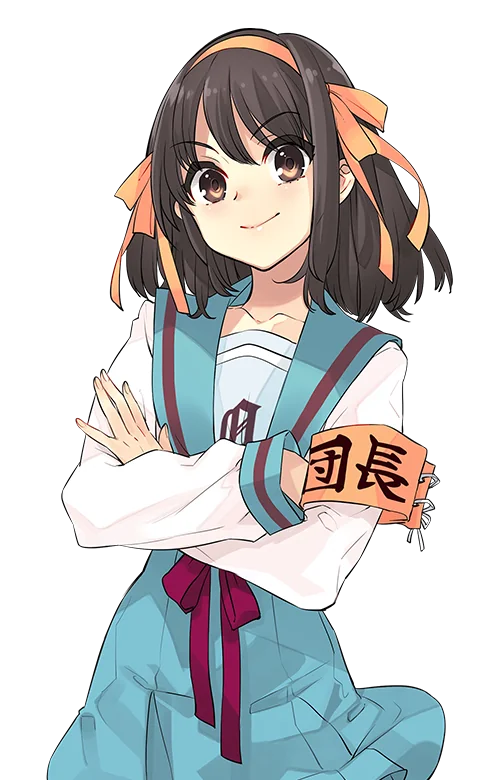
涼宮ハルヒ
Haruhi Suzumiya
The Melancholy of Haruhi Suzumiya
Official Sneaker Bunko art · ©KADOKAWA CORPORATION 2020A word before it is a type
Genki is ordinary Japanese before it is anime vocabulary. The word can mean healthy, lively, vigorous, or in good spirits; genki? can work much like “how are you?” So a genki character is not a rigid type with required plot beats. It is a simple fan observation: this person radiates life.
The Digital Daijisen entry collected by Kotobank reaches beyond cheerfulness to physical vigor and the energy to act. Anime turns that broad quality up until it becomes a scene engine.
The scene starts moving
A genki character talks first. They propose the trip, start the club, grab a friend by the wrist, or decide a dead afternoon needs fixing. Their dramatic function is movement. Everyone else gets to hesitate because the genki character supplies the first push.
Haruhi Suzumiya is an unusually forceful example. She does not just lift the mood. Her curiosity reorganizes lives, and her impatience makes stillness nearly impossible. Calling her genki captures her pace. It does not settle anything about her selfishness, loneliness, charisma, or power.
That distinction matters. Genki energy can be generous or domineering, perceptive or oblivious. The word tells us how visibly and actively a character meets the world. It does not tell us whether their choices are good.
Why the energy works
High energy becomes clearest in contrast. Put an exuberant speaker beside a kuudere and every pause grows quieter. Put them beside a reluctant protagonist and every invitation becomes a plot trigger. The ensemble gets a rhythm: burst, recoil, reaction.
Writers also know when to remove the brightness. A suddenly silent genki character can signal pain faster than a speech because we have learned to expect motion. The missing energy becomes the reveal.
Nearby, but not identical
A deredere shows affection openly; a genki character may be warm without being romantic. A nekketsu character burns with conviction; genki can be lighter, more social, and less tied to a goal. A bakadere mixes affection with lovable foolishness. A genki character may be extremely capable.
Think of genki as emotional tempo. It can stack with almost any other archetype. That is why the label stays useful without becoming a box. It describes the pace—not the destiny.